Showing posts with label Risk Management. Show all posts

Guidance for Packaging Machine Safety


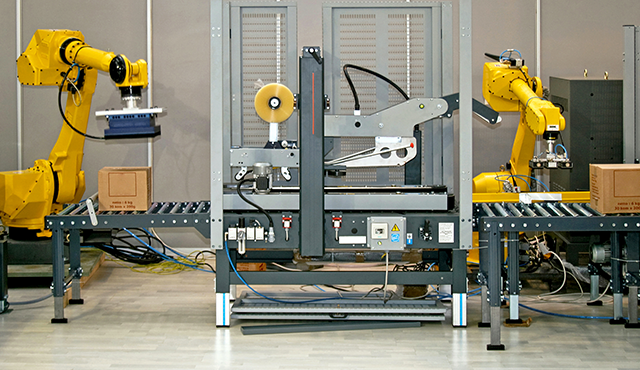
New guidance is now available on how to make packaging machines safe. This will provide much-needed assistance for machines used widely in the food and beverage industry, general manufacturing industry and warehousing/distribution industry. Australian Standards have published 8 new standards to provide guidance for different types of packaging machines:

  1. AS 4024.3401:2018 – Safety of Packaging Machines – Terminology and classification of machines
  2. AS 4024.3403:2018 – Safety of Packaging Machines – Form, fill and seal machines
  3. AS 4024.3404:2018 – Safety of Packaging Machines – Palletisers and depalletisers
  4. AS 4024.3405:2018 – Safety of Packaging Machines – Wrapping machines
  5. AS 4024.3406:2018 – Safety of Packaging Machines – Pallet wrapping machines
  6. AS 4024.3407:2018 – Safety of Packaging Machines – Group and secondary packaging machines
  7. AS 4024.3408:2018 – Safety of Packaging Machines – Strapping machines
  8. AS 4024.3410:2018 – Safety of Packaging Machines – General Requirements

These standards provide consistency with international practice because they are adoptions of the EN 415 series from Europe but be aware some of these standards are quite old. For example AS 4204.3403 is an adoption of a 1999 version standard and AS 4024.3404 is an adoption of a 1997 version standard. This means that many of the document references in these standards are out of date and some of the control measures are lacking when compared to today’s levels of safety, so be aware!

It is always a good idea to formulate the Category / Performance Level (PL) / Safety Integrity Level (SIL) requirement of safety functions based on the risk of the application using methods from current standards, thus using AS/NZS 4024.1501 for Category Selection, AS/NZS 4204.1503 for PL selection and AS 62061 for SIL selection.

It is also a good idea to always investigate what current industry practices are when selecting risk reduction measures. This can be done by referencing any guidance material published on your state WorkSafe website, observing new models of that machine type, exploring how other sites with similar machines provide safety, etc.

That being said, the new Packaging Machine Standards, do provide great assistance for risk assessment of packaging machines because many of the common hazards found on these machines are illustrated. The standards also provide good information on what types of safety measures can be utilised to reduce risk to an appropriate level.


Craig Imrie, Functional Safety Engineer

Written by
Craig Imrie
Functional Safety Engineer (TUV Rheinland #3814/11, Machinery)
Safety Consultant
Rockwell Automation
LISTEN. THINK. SOLVE.


Published: 21 August 2018

Safety Systems Must Be Designed For Productivity


I don’t care if your safety system is CAT 4, PL e or SIL 3, if it significantly interferes with the use of the machine then it’s unsafe. Anyone who works with machinery has seen safety systems that are designed as an afterthought in an ad hoc fashion. For example:

  • Machines where the operator needs to bypass the safety system to set-up  or clean the machine
  • Machines where guards don’t allow the visibility required for the task
  • Safety procedures that are time consuming and become ignored

So how do we avoid these common issues? Guidance is now at hand with the new Australian Standard for Interlocking Design and Principles, AS 4024.1602:2014.

This standard has a method to identify if the proposed safety system will create a motivation to defeat. Firstly the designer must identify the modes of operation, for example common modes would be; normal operation, manual operation, cleaning, maintenance, etc. The designer then needs to identify what tasks are performed in these different modes of operation.

The method will then assess if the safety system allows the task to be performed in the mode. If not, then a redesign of the safety system is required to allow for this activity.

If the safety system does allow the task to be performed, the designer still needs to analyse if the safety system interferes with this activity. For example there might be motivation to defeat the system because of these typical reasons:

  • The task can be performed much quicker if the safety system is defeated
  • The safeguard restricts visibility or audibility required to perform the task properly
  • The safety procedure requires much more physical travel
  • The safety system restricts movement and adds difficulty in performing the task

If motivation to defeat is discovered then design measures that will eliminate or minimize this motivation must be considered. For example, providing a transparent guard to allow the required visibility to perform the task. If there aren’t ways to minimize motivation for defeat then the standard recommends measures that can be used to make defeat difficult. For example, selecting highly coded safety interlock devices that are difficult to defeat.

Design of interlocking systems to reduce motivation for defeat has always been a consideration in the safety standards but now a formalised method is available for use. It is hoped that safety systems will be designed with the operation of the machine in mind so we can avoid non-productive safety systems that encourage defeat and create unsafe practices.


Published: 12 December 2014

Is Work Health and Safety Harmonisation Still Alive?


In July 2008, an agreement was reached between the Commonwealth and all states and territories within Australia except Western Australia (WA) to begin the process of harmonising Australia’s work health and safety laws. This new model was aimed at reducing red tape and compliance costs for businesses that operate in multiple states. The umbrella laws would also provide workers with equal levels of safety across the nation as well as recognising their licensing and training nationally.

Fast forward to 2013 and what is the state of play? We now have Queensland, Northern Territory, New South Wales, ACT, South Australia and Tasmania all adopting the harmonised model. This leaves just WA and Victoria out of the loop.

WA are still committed to the process and have completed their draft WHS which is expected to be implemented in 2013. WA has also started public consultation on the Regulations in August 2012 and will be working through this process in 2013.

This leaves Victoria. The last communication on the WorkSafe website stated that Victoria would not adopt the national legislation. The reason for this stance is an expected $3.4 billion cost over five years with no perceived benefit in terms of safety levels.

So what does this mean for harmonisation? Do you believe it will still be successful without the involvement of Victoria? Do you believe that Victoria will eventually join the rest of the states and adopt national safety legislation or stay with their own set of rules?

Published: 31 January 2013

How often should risk assessments be reviewed?


A common question associated with machine safety is, how often does the machine’s risk assessment need to be reviewed? In the past each state and territory had its own Act, Regulations and Code of Practice, which had slightly different requirements. Some legislation, such as NSW Regulations 2001, states that some risk assessments should be reviewed every 5 years. Another document released by the Queensland government titled “Guide to Safeguarding common Machinery & Plant” indicated that risk management should be reviewed once every 12 months.

The national Work Health and Safety (WHS) legislation was planned to remove these differences by providing a uniform set of Act, Regulations and Code of Practice for all states and territories. Unfortunately this hasn't been adopted by all states this year. The following guidance comes from the Safe Work Australia Code of Practice, “How to Manage Work Health and Safety Risks.”

The process of Risk Management, which includes risk assessment, is an ongoing process that may be triggered when:
  • Starting a new business
  • Changing work practices, procedures
  • Purchasing new equipment
  • New information on risks becomes available
  • An incident occurs
  • Workers, health and safety representative or others raise concerns
  • WHS regulation specify the need for specific hazards
My question would be; if none of the above events occur, when should the existing risk controls be reviewed?

Published: 19 November 2012